

On April 3, 2014, Microsoft announced that it will cancel the license fees for 9" and smaller smartphones running on its Windows Phone OS. Microsoft, who used to rely on selling or licensing software used in notebook PC as sources of revenue, lose it shine in the smartphone and tablet markets, in which Microsoft's software accounts for relatively small share.
According to MIC, shipment volume of Windows Phone smartphones reached about 33 million units in 2013. In 2014, worldwide shipment volume is forecast to top around 40 million units, taking up merely 3% market share. The License fee for Windows Phones is roughly US$15 per device and totaled about US$500 and US$600 billion, taking up less than 1% of Microsoft's total revenue of US$ 77.8 billion in 2013.
In addition, over 90% of Windows Phone were shipped for Nokia. But with Nokia becoming a part of Microsoft, its contribution to Microsoft's revenue no longer exists as it is now entitled to use Windows Phone without any license fee.
"Eliminating the license fee seems to put Microsoft on the right track but might be a bit late," according to Edward Lin, MIC's sensor analyst.
Lin said that waiving the license fee does not means that Windows Phone products are now well positioned to capture the market as there are more factors to affect production costs. Taking Android as an example, in addition to the waiving of the license fee, Google has the support from first-tier IC chipmakers such as Qualcomm and Intel that have reference design to help lower entry barriers.
Moreover, Android's high market dominance and high shipment scale have given rise to apparent economies of scale. Coupled with low assembly costs, Microsoft is still lagging far behind Google in development despite its recent move.
On top of that, mature countries have high smartphone penetration rates and most of users have chosen either Android or iOS products and get used to the mobile ecosystem. Thus, despite the performance of Windows Phone, it is getting tougher for users to switch to other platform in this regard.
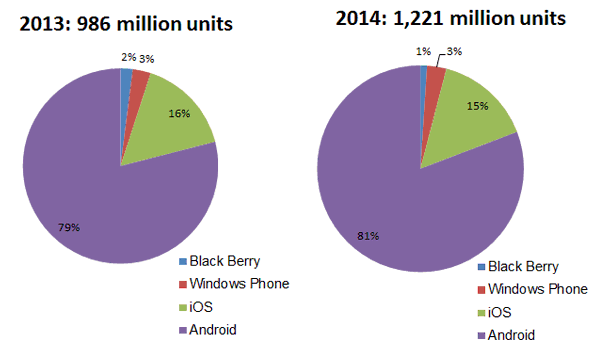
Global Smartphone Market Share by Operating System, 2013 - 2014
|
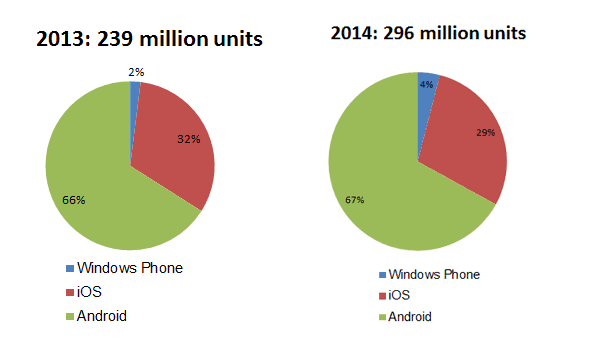
Global Tablet Market Share by Operating System, 2013 – 2014
|
